

Chapel Hill, North Carolina, isn’t a place you’d expect to reshape the future of global technology. But on September 1–2, 2026, it did exactly that.
The G20 Innovation Ministerial co-hosted by the US Department of Commerce and the White House Office of Science and Technology Policy (OSTP) brought together the world’s leading economies to chart the next chapter of innovation.
On the sidelines of the Ministerial, Howard Lutnick, US Secretary of Commerce, sat down with Jitin Prasada, India’s Union Minister of State for Commerce and Industry, for a bilateral deepening cooperation across semiconductors, AI, and data centres , the three pillars increasingly seen as the load-bearing walls of the modern digital economy.
Less like a formality and more like a blueprint :
The Indian delegation which included Ajit Kumar, Joint Secretary, Ministry of Electronics and Information Technology (MeitY), alongside senior officials from the Department of Science and Technology (DST) and DPIIT and this made much clear this was a whole-of-government push, not a one-minister moment.
Carolina Principles for Emerging Technologies :
In addition India has officially joined the United States and 24 other nations in a landmark global initiative to shape the future of 6G networks.
Michael Kratsios, Director of the White House OSTP, framed the broader Ministerial outcome and for India, joining the 6G coalition isn’t symbolic — it’s a seat at the table where security, competitiveness, and next-gen connectivity standards will be decided for the next decade.
Chapel Hill emerge to a Shared Future :
Data centres that need trusted networks like 6G. It’s one continuous chain — and Chapel Hill just added a strong new link between Washington and New Delhi.
The question now isn’t whether US–India tech cooperation is real. It’s how fast both nations can turn Chapel Hill’s handshake into factories, fabs, and 6G towers.
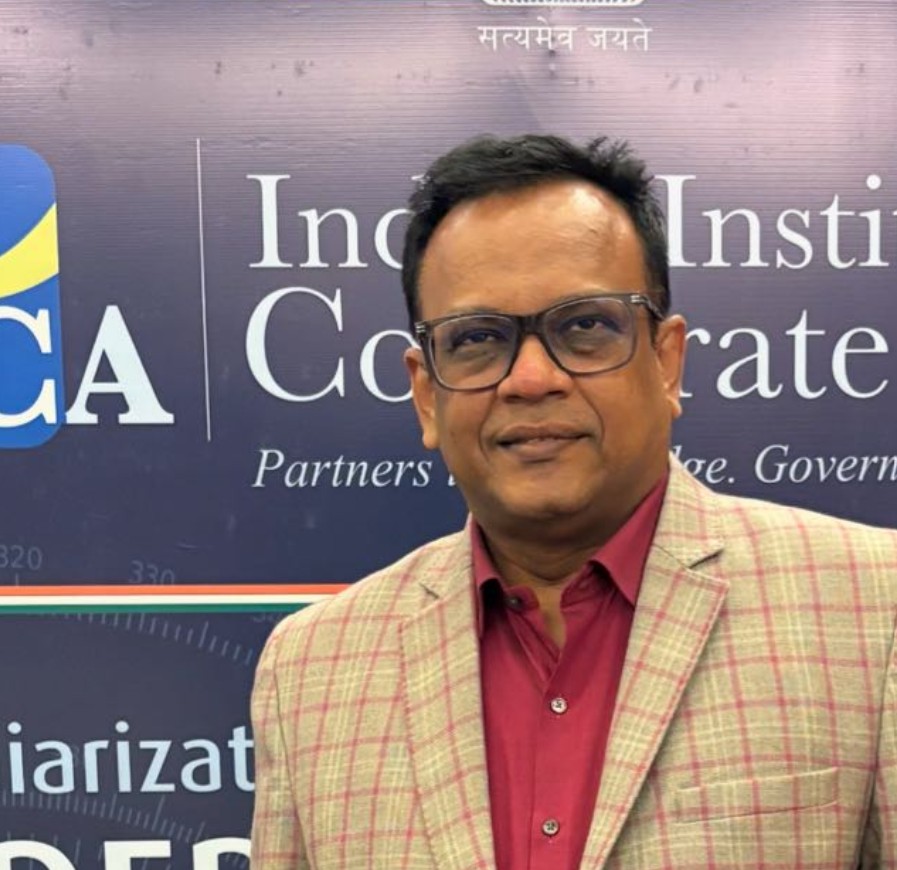
Author Sa. Venkat Ramanujan is a Certified Environment Social Framework Specialist of Word Bank Group and also Certified Independent Director of IICA, Ministry of Corporate affairs , Govt of India.
He is Member of Institute of Directors & All India Management Academy ( AIMA ),
He is Founder & CEO of Trust Infosys Incorporation – Govt. of India accredited startup venture, A distinction holder in his Post graduate MBA studies and a sustained learner for three decades in the domains of engineering & infrastructure projects , international trade & contracts , data & cloud management , environmental, social & corporate governance.,
Environmentalist, Voracious Reader, Interested in Cats and Dogs, Love Gardening, Reuse & Recycler of Natural Resources,
for more details check in >> venkatramanujam.in