

Indian Space Research Organisation (ISRO) is gearing up for a comeback on September 4th 2026 at 2:55 AM, IST , the GSLV-F17 rocket will carry the EOS-05 (GISAT-1A) satellite from Sriharikota, aiming to redeem a mission lost four years ago due to a cryogenic stage malfunction .
This isn’t just another launch it is a strategic leap forward for India nation’s security and disaster management infrastructure.
🔬 Technical Mastery:
Technically, the GISAT-1A unlike traditional Earth observation satellites that fly in Low Earth Orbit (LEO) and pass over a location only briefly, EOS-05 will reside in a geostationary orbit, approximately 36,000 km above the Earth .
The satellite is equipped with a sophisticated 700-mm Ritchey-Chrétien telescope and sensors operating in multispectral and hyperspectral bands . This enables it to image a selected area every five minutes and cover the entire Indian landmass every 30 minutes at a spatial resolution of 42 meters .
This provides near-real-time data for monitoring dynamic events like cyclones, floods, and agricultural stress, offering a persistent surveillance capability that low-orbit satellites simply cannot match.
🌏 The Race with China
In the Asian context, ISRO’s GISAT-1A is India’s direct response to China’s formidable Gaofen (High-Resolution) Earth Observation System. China’s Gaofen series is extensive , with over 20 satellites launched since 2013, it offers a broad spectrum of capabilities, including sub-meter optical resolution (GF-7) and advanced radar (GF-3) for all-weather surveillance .
While India may not yet match China’s overall volume, the GISAT-1A mission establishes a critical “geostationary watch” capability, reducing dependence on foreign satellites for rapid-response intelligence and reinforcing national security .
🌎 Commercial Synergy:
The US leads the global commercial Earth Observation market with a 38% share, driven by entities like Planet Labs and Maxar, leveraging AI and cloud-based platforms for geospatial intelligence for defense and commercial sectors like logistics and insurance .
Conversely, Europe, holding 27% of the market, emphasizes a strong regulatory framework and sustainability, with heavy investment from the Copernicus program and a specialization in Synthetic Aperture Radar (SAR) technology .
Notably, NASA’s Commercial Satellite Data Acquisition (CSDA) program increasingly sources data from leading European firms like Kuva Space and OroraTech, validating the technical prowess of European vendors
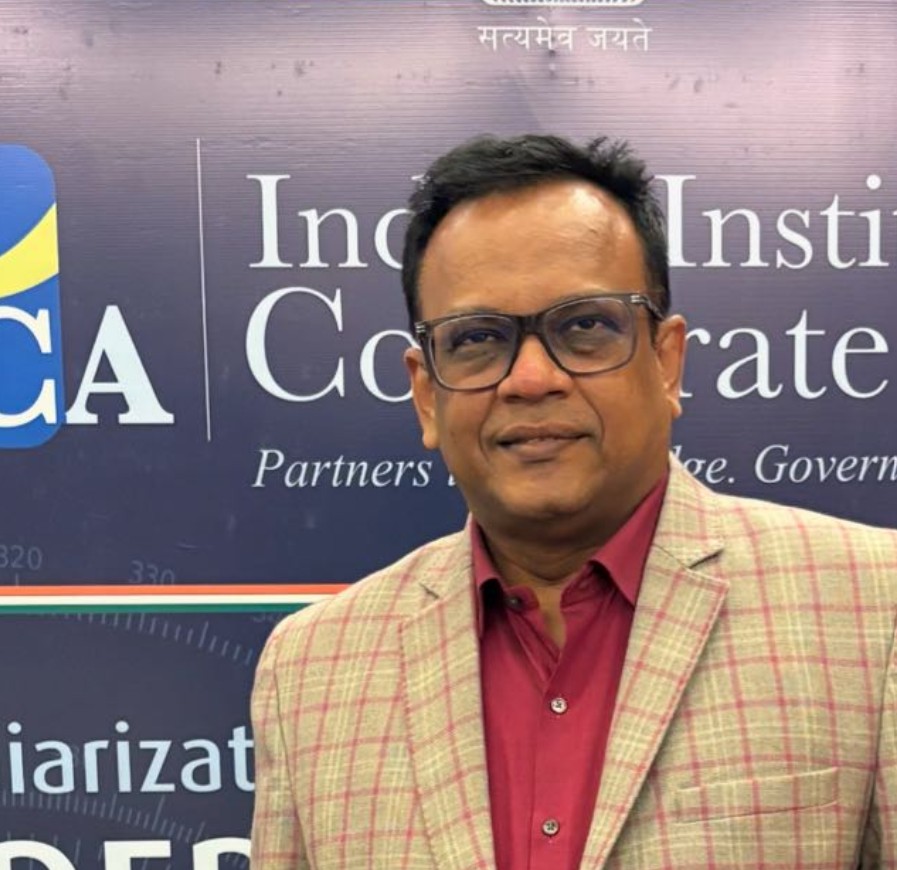
Author Sa. Venkat Ramanujan is a Certified Environment Social Framework Specialist of Word Bank Group and also Certified Independent Director of IICA, Ministry of Corporate affairs , Govt of India.
He is Member of Institute of Directors & All India Management Academy ( AIMA ),
He is Founder & CEO of Trust Infosys Incorporation – Govt. of India accredited startup venture, A distinction holder in his Post graduate MBA studies and a sustained learner for three decades in the domains of engineering & infrastructure projects , international trade & contracts , data & cloud management , environmental, social & corporate governance.,
Environmentalist, Voracious Reader, Interested in Cats and Dogs, Love Gardening, Reuse & Recycler of Natural Resources,
for more details check in >> venkatramanujam.in